As an e-commerce business owner, you’ve probably invested a significant amount of time, money, and effort into optimising your website. Despite all your efforts, you might not be seeing the results you expected. This guide will walk you through the essential steps to correct your SEO strategy, focusing on technical SEO, content optimization, and backlink building, to ensure you rank better on Google and increase your online visibility.
Understanding the Common SEO Pitfalls
Most website owners fall into one of two categories when it comes to their SEO efforts:
- Over-focus on technical SEO with little attention to content and backlinks.
- A more balanced focus on technical SEO, content, and backlinks, but with incorrect allocation of resources.
The Ideal SEO Breakdown:
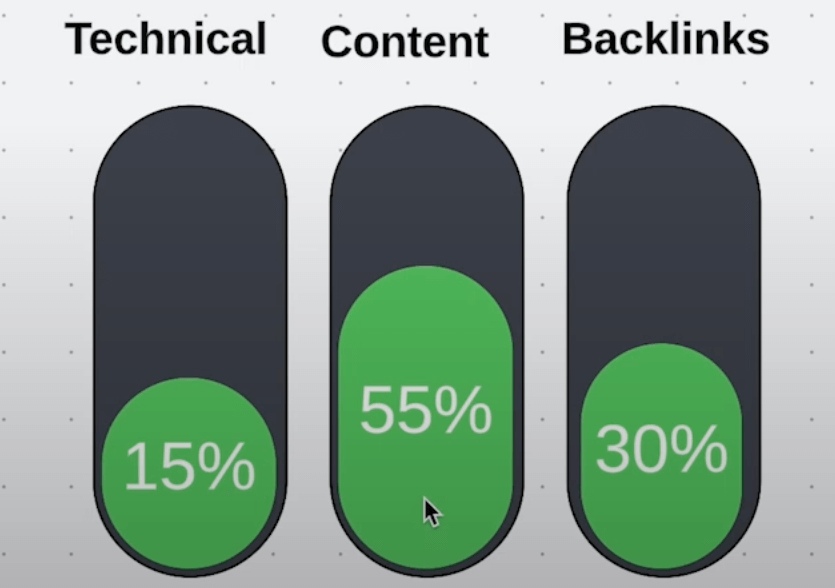
- Technical SEO: 15%
- Content Creation: 55%
- Backlink Building: 30%
This breakdown ensures that you’re giving enough attention to content and backlinks while maintaining the necessary technical SEO aspects.
Crucial Technical SEO Elements
Even though technical SEO should not consume the majority of your efforts, it’s still important. Here are the most critical technical factors you should address:
- Site Crawlability and Indexability: Make sure your pages are properly indexed by search engines. Use tools like Google Search Console and SEO extensions to ensure the right pages are indexed, and that pages you don’t want indexed are blocked using robots.txt.
- Page Speed: Ensure that your pages load in under 3 seconds. While achieving green scores on Core Web Vitals isn’t necessary, the faster your site loads, the better. Use tools or plugins to compress images and minify HTML/CSS.
- Duplicate Content: Resolve any issues with duplicate content by setting correct canonical tags and ensuring your pages use either the trailing or non-trailing slash format consistently.
- Crawl Depth: Keep your pages no more than three clicks away from the homepage. This will make your site more navigable and improve how search engines index your pages.
- Broken Links: Regularly check for and fix broken pages and redirect chains. Tools like Screaming Frog and Google Search Console can help you identify these issues.
Content Optimization
Content is king, and in SEO, it plays a pivotal role. Here are some tips to ensure your content performs well:
- Target Search Intent: Ensure your content meets the user’s search intent. If you’re targeting a keyword, check the type of content currently ranking for that keyword. For example, if most of the top results are blog posts, focus on creating blog content rather than product pages.
- On-Page SEO: Follow the H2O principle by optimizing your meta titles, H1 tags, and URLs with your target keywords. Keep URLs consistent and avoid changing them unnecessarily, as this could negatively impact your rankings.
- Semantic SEO: Incorporate secondary and related keywords throughout your content to capture more relevant search queries. Use tools like Google Search Console and keyword research extensions to identify these additional keywords.
- Internal Linking: Strengthen your internal linking strategy by linking high-performing pages to other related content within your site. This helps spread link equity and improves the crawlability of your pages.
Backlink Building
Backlinks are critical for SEO success. Here’s how you can approach building a solid backlink profile:
- Foundational Backlinks: These include links from social media profiles, directory listings, and niche-related forums. Even though these links are easier to acquire, they provide essential authority for your site.
- Guest Posting: Reach out to niche-specific websites and offer to write guest posts. However, this method has become more difficult unless you provide expertise that is highly valuable.
- Create Linkable Assets: Develop valuable content such as statistical posts, case studies, or unique tools that others in your industry will link to naturally. For example, create visually appealing data visualizations or downloadable resources like templates or calculators that people will want to reference.
Outsourcing Content
If you’re running an e-commerce site, you’ll likely need help with content creation at some point. When outsourcing content, make sure to follow these guidelines:
- Provide Clear Briefs: Create a detailed content brief outlining the keyword focus, search intent, and format. This ensures that the content aligns with your SEO strategy.
- Test Writers: Hire writers on platforms like Upwork and offer them sample tasks to gauge their ability before committing to a long-term contract. Avoid using low-quality freelance platforms that may deliver poor results.
- Review and Edit: Always review the content for quality, grammar, and SEO optimization. Use tools like Grammarly and plagiarism checkers to ensure originality.
Using Data for Original Research
Original research can help you stand out from the competition. Instead of regurgitating information already available online, dig deeper into forums like Reddit and Quora to gather unique insights and perspectives. This type of original content will not only be valuable to users but also to Google, which values fresh, informative content.
Final Thoughts: Sprint Your SEO Efforts
SEO is often seen as a long, ongoing process with no clear endpoint. To avoid burnout and achieve faster results, consider breaking your SEO efforts into “sprints.” Set clear goals such as publishing a certain number of blog posts, creating new category pages, or acquiring backlinks within a set time frame. This allows you to measure progress and adapt your strategy more quickly.
By addressing these key areas—technical SEO, content optimization, and backlink building—you’ll improve your site’s performance and see better results in search engine rankings. Be methodical in your approach, and remember that SEO is a marathon, not a sprint. With the right balance of strategies, your e-commerce site can achieve sustainable growth over time.